Our storySelamat datang
One family, one valley
The family
Three generations on the same slope
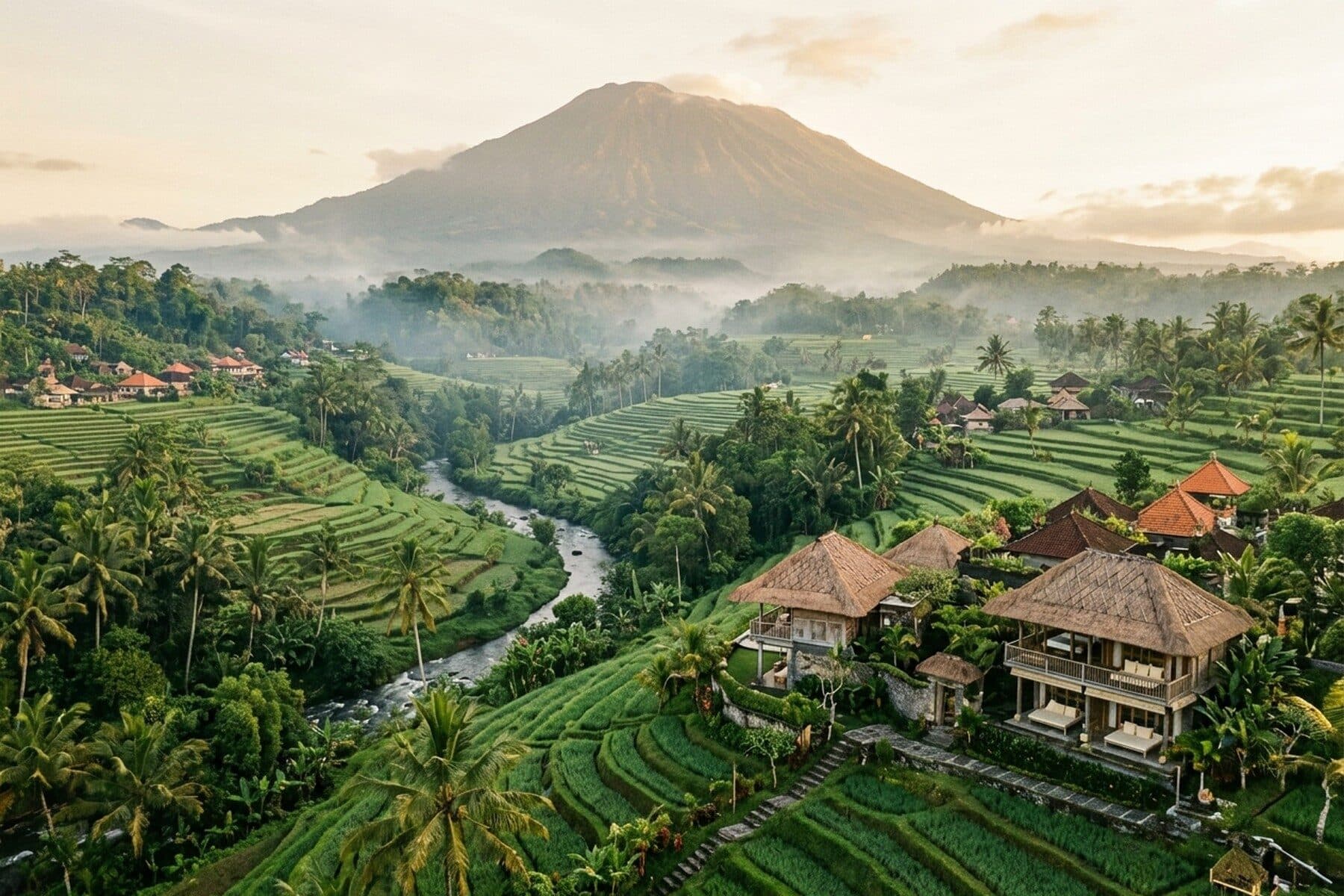
Lumbung started with a barn. Our grandfather kept the harvest in a thatched lumbung at the top of the terraces, and when walkers on their way to Agung asked for a place to sleep, our parents gave them the floor of the bale and a plate of rice.
That was the beginning. The houses came one at a time, built by the same carpenter, each where it fitted between the paddies and the river. The family still lives here, still farms, and still answers the phone.
“We booked two nights in Lumbung Padi and stayed six. The host’s mother taught us to make canang sari on the first morning.”
How it grew
From one barn to ten houses
Slowly, and in the order the money and the carpenter allowed.
First generation
Kakek Nyoman
A farmer and his rice barn
Our grandfather farmed these terraces with his brothers and kept the harvest in a lumbung on stilts at the top of the slope, out of reach of the rats and the rain. The barn is still there. It is the one Lumbung Padi was rebuilt from.
Second generation
Bapak Made & Ibu Ketut
Two rooms for walkers
Our parents started by giving a bed and a meal to walkers who came through the valley on the way to Agung. Then two bamboo rooms. Then a teak joglo, carried in pieces from Java, because our father fell in love with one in a village near Yogyakarta and would not stop talking about it.
Third generation
Wayan, Kadek & cousins
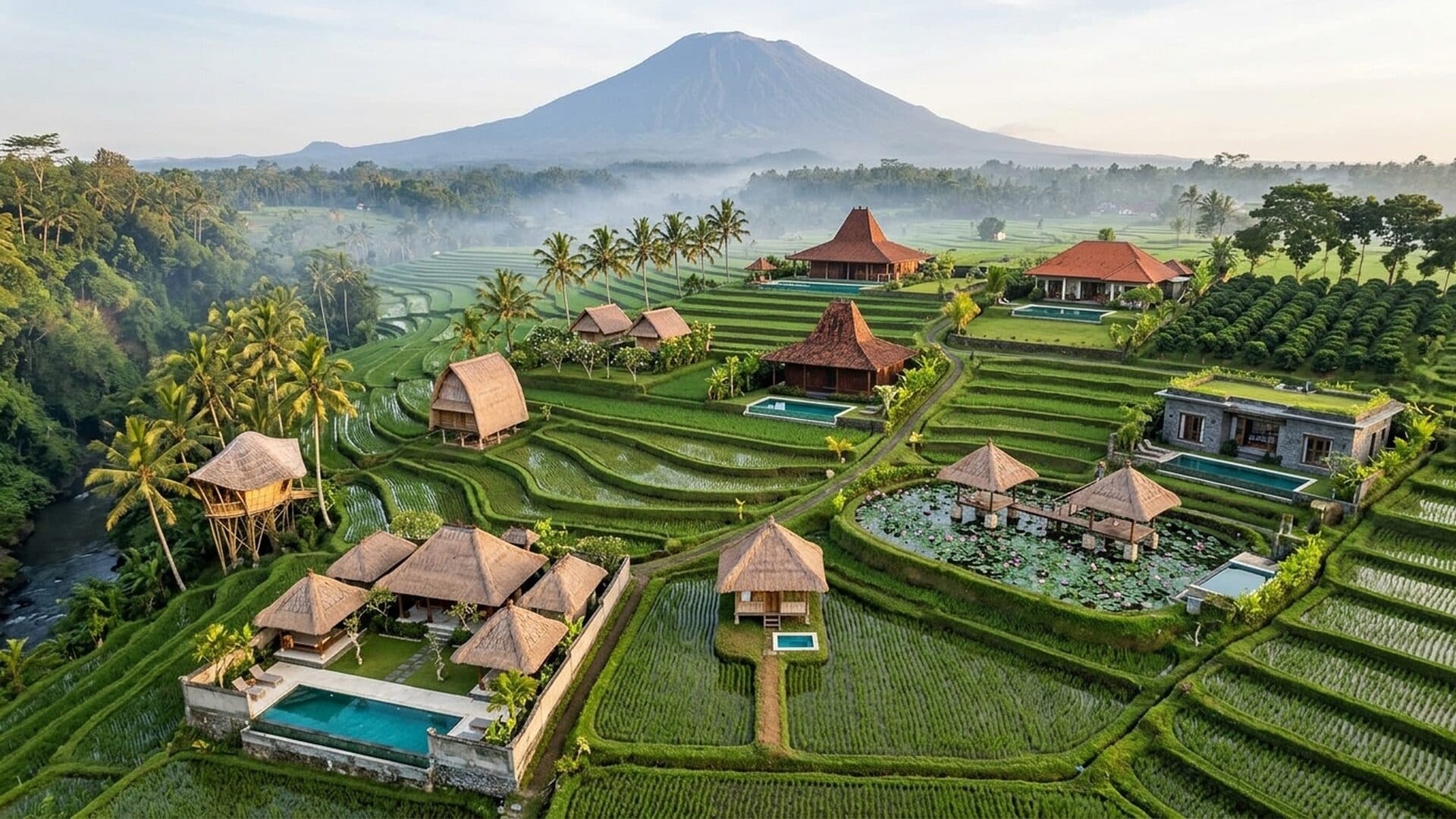
Ten houses in the rice fields
Today the grandchildren run reception, the warung and the bookings, and our parents still farm the terraces around the villas. There are ten houses now. We have decided that ten is enough.
Every day
Setiap pagi
Still a farm, still a family
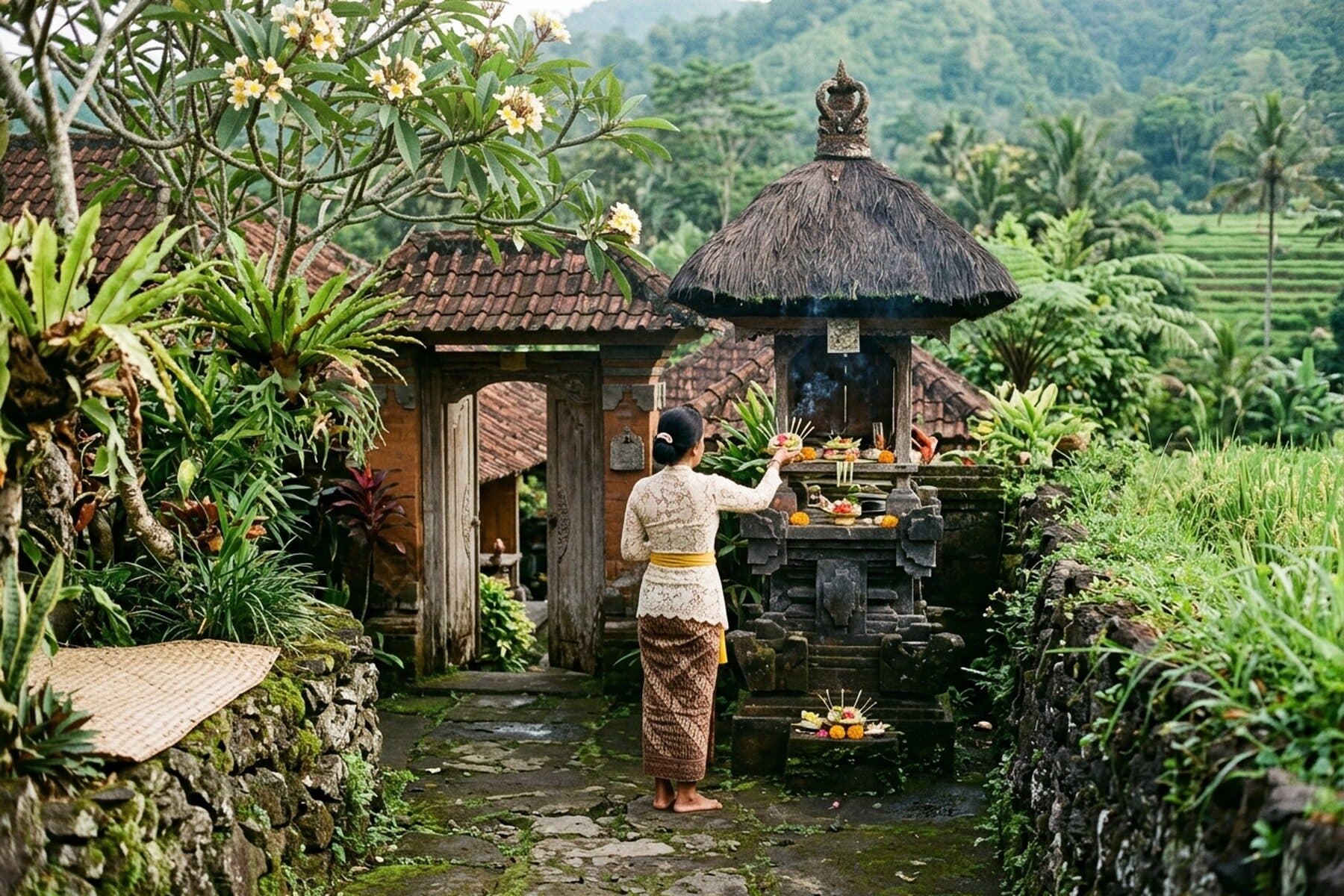
The rice is planted and harvested by hand on the same cycle as before. Ibu Ketut still makes the morning offerings for every villa. If you wake early, you will see her on the paths with a tray of canang sari.
The builder
Pak Komang, and no nails
Tukang kayu dari desa sebelah
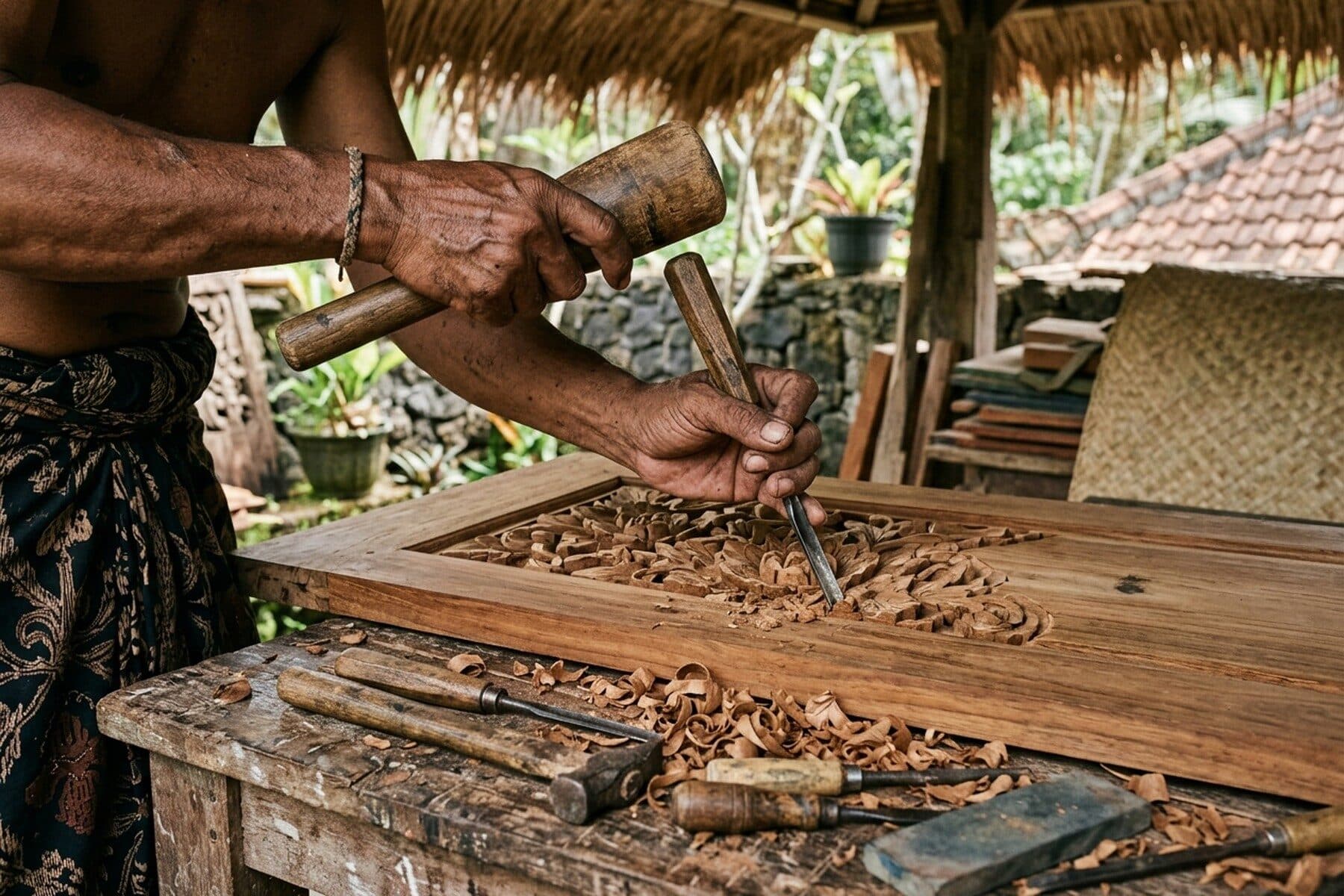
Every lumbung and joglo here was built, or rebuilt, by Pak Komang, a carpenter from the next village, and the men he trained. He works the way his teacher did: mortise and tenon, wooden pegs, no nails in the frame. A lumbung roof is a curve of bamboo battens tied with rattan and covered in alang-alang grass, laid thick enough to keep a room cool at midday and warm at night.
The joglos came from Java as numbered beams, the way they have always travelled. Pak Komang spent a season learning how they go together, and he will happily tell you about it if you find him in the workshop behind the coffee garden. He is also the person to ask if a door sticks.
“No nails in the frame. If you build it right, it moves with the earth and stays standing.”
The valley
Sidemen, east of everything
Sidemen sits in the hills of Karangasem, the quiet eastern end of Bali, where the Unda river cuts a green valley below Mount Agung. Terraces run down both sides, fed by water from the mountain. Mornings start in mist. Evenings are cool enough for a long sleeve. The beach is about an hour away, and most people forget about it.
- private houses
- 10private houses
- above the sea, cool evenings
- 400 mabove the sea, cool evenings
- from Denpasar airport
- 2 hfrom Denpasar airport
- family, three generations
- 1family, three generations
What we hold to
Three things we don’t bend on
- 01
Prices you can see
Harga jelas
Every villa shows its nightly price, and you see the total for your stay before you pay. Taxes are shown exactly as charged. Add-ons have their price next to them. No “from”, no “enquire”.
- 02
Local hands
Tangan lokal
The people who clean your villa, cook your breakfast, guide your trek and give your massage are from the valley. We buy rice, coffee, fruit and flowers from the families around us before anywhere else.
- 03
Water and rice
Air dan padi
The terraces are fed by the subak, the old shared irrigation system, so we take our share of water and not more. The shared pool is saltwater, the paddy is farmed, and the paths stay unlit beyond the villas so the fireflies have somewhere to go.
Sampai jumpa